

Recycling is essential to transform the ‘old linear life cycle’ of plastic products to a new circular model. Plastics should no longer be regarded as waste, but as a valuable raw material for new applications. Plastic recycling is one of the key elements that helps to solve the ‘plastic waste crisis’. The two main types of recycling are mechanical and chemical recycling.
Mechanical recycling
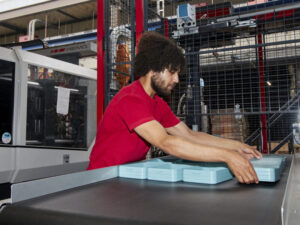
Before recycled plastics can be processed with an injection molding machine ,waste needs to be converted to plastic. This phase starts after collection of waste and according the following steps:
- Separation and sorting: This can be done on the aspects of shape, density, size, color and/ or chemical composition
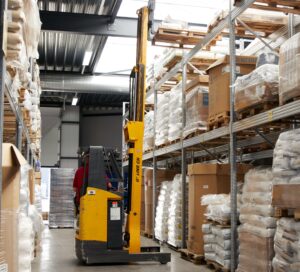
- Pressing into bales: If the plastic is not processed where it is sorted, it is often baled for transport purposes
- Washing: Removing (often organic) contaminants
- Grinding: Reduction of products into flakes
- Compounding & pelletizing: Optional reprocessing of the flakes to granulate, which is easier to use for converters than flakes
Depending on ‘how clean’ the plastic is, it can be decided to perform certain steps several times or not to perform them at all.
Chemical recycling
In chemical recycling, the chemical structure of plastic waste is changed and broken down into the original building blocks (polymers, monomers or atoms). This can be used to make new plastics, but also products such as chemicals or fuels. Four different techniques are often distinguished, which include solvolysis (dissolving), depolymerization, pyrolysis (cracking) or gasification.
There is currently a lot of interest in chemical recycling worldwide. Major parties such as BASF, Shell and Sabic are making large investments. Governments provide subsidies, and it is expected that chemical recycling (just like mechanical recycling) will rapidly grow in the future.
Just 20% of all types of plastic is currently recycled. Chemical recycling will ensure that much higher recycling targets can be achieved, whereby the dream scenario would be as follows:
- Mechanical recycling 40%
- Chemical recycling 40%
- Biobased plastics 20%
Benefits
Chemical recycling can help prevent plastic waste from ending up in incinerators or landfills when it is not suitable for mechanical recycling. Some advantages of chemical recycling compared to mechanical recycling are:
- Additives, fragrances, and colorants can be separated
- Combined materials and plastics in one packaging can be separated from each other
- It offers more possibilities for the application in food approved products
- With chemical recycling, a much higher percentage of recycling is possible
- In the long term, there is a high CO2 reduction.
- Chemical recycling can give plastic a better image.
Disadvantages
Chemical recycling is not yet widely used. Many companies are still in the development phase.
A disadvantage is that the required waste flows for chemical recycling have to be cleaner than previously thought. Especially the techniques with a high CO2 reduction also make higher demands on the quality of the waste. Many new initiatives work perfectly on a laboratory scale with clean materials as input. Practical tests with contaminated waste streams (which are difficult to recycle mechanically) are not always successful.
Techniques such as gasification and pyrolysis impose less stringent requirements on the input of waste, but these techniques also achieve a lower CO2 reduction.
Furthermore, chemical recycling is often cost-intensive due to the amount of energy required (certainly due to high prices in 2022!) and also the needed chemicals/catalysts.
Reobijn follows developments closely. Where possible, recycled plastics are used for various components and we try to increase the percentage of recycled plastic together with our clients. For example, we use recycled plastics for parts of heat recovery units and for parts for mounting of solar panels.