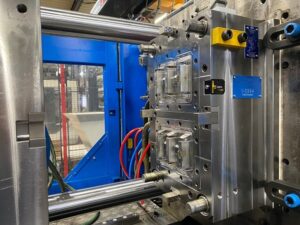


Injection molding is one of the leading processes for manufacturing plastics. It is widely used for the mass production of identical parts with close tolerances. It is a cost-effective and highly repeatable technology that provides high-quality parts for high-volume production.
It is a fast, intensive process that requires high heat and pressure to inject molten material into a mold. The molten material depends on the size of the fabrication project. The most popular materials are various thermoplastics such as ABS, PS, PE, PC, PP or TPU, but metals and ceramics can also be injection molded. The mold consists of a cavity that houses the injected molten material and is designed to accurately reflect the final characteristics of a part.
Cost of the mold
Normally the most important cost factors in injection molding are the cost of the mould, also known as the tooling cost. The cost of designing and building a mold depends on the volume of production required, the complexity of the part design, the mold material, and the process used to make the mold. Costs of designing and manufacturing complex molds for high volume production can run up to €250,000 and more.
Despite the relatively high fixed start-up costs, the injection molding process has low variable costs due to the cheap thermoplastic materials, short cycle times, and the low labor requirement due to automation and economies of scale. This means that variable production costs are low and the process becomes more efficient. The cost per part decreases with higher volumes, as costs are spread over hundreds or thousands of parts. Due to these low costs per product, a mold investment can quickly pay for itself.
Variable cost
Size of the part: The larger the item or part to be made, the larger the mold will be to accommodate the part. Larger parts usually require more injected materials to complete production cycles. Larger mold designs usually incur a higher cost compared to manufacturing the same design, but with smaller dimensions.
Product design: Complex product designs with intricate geometries require complex molds. Mold designs usually have 2 sides, namely side A and B. Side A, also called the cosmetic side, is usually the side that the user sees. Side A is expected to be smooth and aesthetically pleasing. Side B contains the hidden structures that support the use of the part. Structure of side B may include ribs, cams, etc. and the finish is usually much rougher than that of side A. Molds with complex designs of side A and side B are generally more expensive to manufacture compared to simpler molds. Complex designs may also require several slides and cores, increasing the cost of the mold.
Quantities: The number of items to be produced by injection molding determines the production technology and the quality of the material to be used in the mold making. Low quantity projects require lower quality molds, while high production volumes require high-quality steel molds or even multiple molds to manage the process without wear affecting the quality of the items produced. This affects the cost of the mold. However, the higher costs are spread over more parts, which normally leads to a lower cost per part.
Product volume and number of cavities: Product volume refers to the cavity size of a mold. The more cavities or cavity volume a mold needs, the longer the cycle time. A longer cycle time slows down the production process, leading to higher costs.